

2025 was a peculiar year for the energy industry, globally and in Japan. Not because of a single technological breakthrough or policy pivot, but because the rules of the game shifted abruptly.
Donald Trump’s return to the White House restored political momentum to fossil fuels. For energy companies, this meant not just a more complex investment environment, but a faster-moving one that increasingly rewarded speed, flexibility and specialist expertise.
At the same time, the first large-scale battery storage projects came online, nuclear power re-entered the mainstream, and grid constraints replaced land scarcity as the sector’s defining bottleneck. All these carry distinct implications for engineers, developers, policy specialists and commercial talent.
Looking ahead, 2026 is likely to be shaped less by decarbonization targets alone than by the twin imperatives of energy economics and energy security. Japan’s focus is toward technologies it can scale, defend and export – from storage and grids to nuclear and hard-tech manufacturing.
As a result, the most acute pressures in the energy sector will not only be financial or regulatory, but human: where talent is scarce, where it is being redeployed, and where new capabilities must be built almost from scratch.
The key question is which functions and sectors will feel the pull first – and where the gaps will prove hardest to fill. The following sections set out our expectations for functional and sectoral talent demand in 2026.
Talent demand growth areas by functional perspective
Local Development: With a bright spotlight on forestry development and the environmental impact of large scale renewable projects, community engagement is critical. Developers are already fiercely battling over talent to ensure that their project pipelines will be delivered.
Policy & Advocacy: As policy shifts more quickly than before, and rules on markets and subsidies are changed multiple times within a year, industry players are investing in talent who can monitor, analyze and ideally influence policy and policymaking.
Electrical and Grid Engineering: The largest bottleneck for projects — whether solar, wind, battery, data center — has shifted from land scarcity to grid capacity. Prior to the 7th Basic Energy Plan, the assumption was that total electricity usage would decline. The rapid expansion of AI data centers and power hungry manufacturing, as well as a steady increase in fluctuating power from renewable sources has put massive strain on an aging grid. Demand for talent who can work with TSOs is rising as interconnection timing and costs make or break projects.
Forecasting & Analytics: In an increasingly complex energy mix, market and political situation, investors, lenders, developers, traders and offtakers all need more visibility to make decisions and build competitive advantages. Whether this is in-house talent, or growth of data-driven advisory service companies, the demand for talent in data science, machine learning, analysis and forecasting is only going one way.
Commercial and Offtake: We are past the ‘PPA winter’ of a couple of years ago where few companies were able to commit to long term offtake. Now, prices are becoming clearer, buyers understand contracts and risk, and with the expected phaseout of subsidies for large scale solar and increase of BESS capacity, offtake and tolling contracts will become more critical, and also more complex and bespoke. This is an area we expect to see continued growth in demand for talent across all related players in the industry.
Sector by sector talent demand
Areas supported by state subsidies, denoted as important for strategic growth, and also areas under heavier scrutiny, have all been well published and discussed. Here, I’d like to put the lens on the talent trend for 2026 in key sectors in energy.
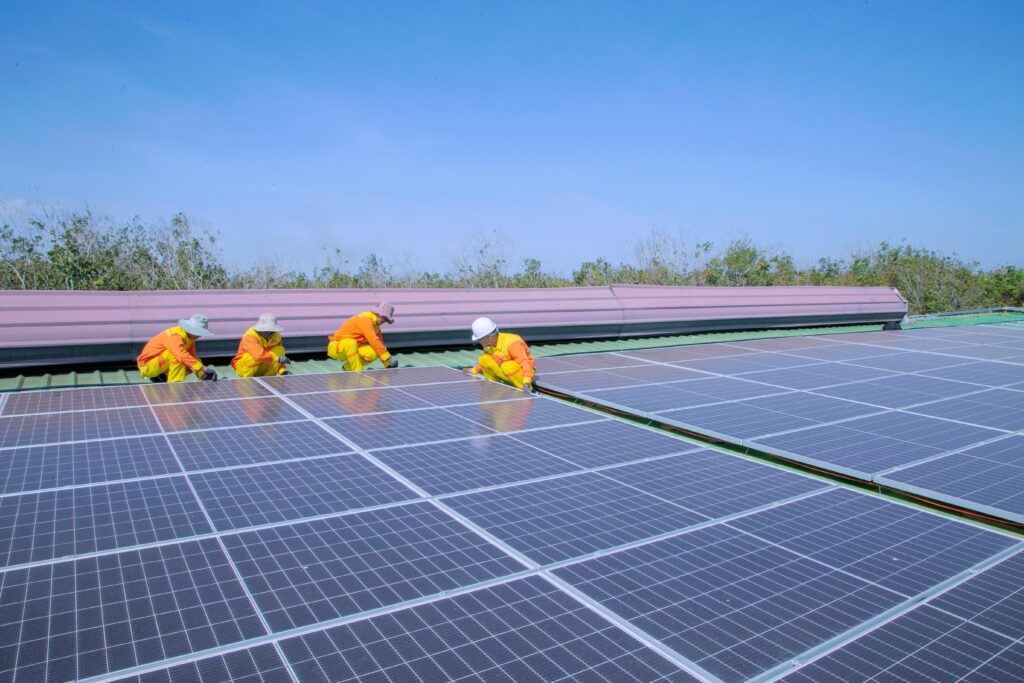
PV Solar: Redistribution of talent within the industry. Solar is not shrinking, but it is changing and not every player has the capability or will to change with it. We are already seeing investors be careful with taking on too much land risk with large projects, and lower valuations for early stage mega projects. Some companies are likely to sell and exit, yet others who can develop smaller projects and commercial and industrial connections will continue to grow.
Energy Storage: Continual growth through 2026, though large-scale projects are coming online and volume will increase this year. We still see healthy capital inflows, growth of existing platforms / developers and new players entering the market. This will create more talent demand across companies in this asset class.
Wind Power: 2026 likely to remain relatively flat, hopefully with positive signs to come later in the year with the rebid on Round 1 projects and clarity on future rounds. Right now, industry players are still in wait-and-see mode. With the harsh lessons of the last couple of years with rising costs and large project exits, most are hesitant to make aggressive expansion plans and investment into their teams. On the onshore side, as projects are more heavily scrutinized, I think we’ll see a similar redistribution of talent from firms who struggle to get projects developed to those who are showing clear competency and pipeline growth.
Geothermal: Positive signals for the sector, however this won’t translate to a high volume of job opportunities yet. The development cycle is too slow for new players to invest heavily, and incumbent players are already well staffed for early stage work. As policy is the main bottleneck — rather than lack of resources or land as with less energy dense renewables — the impact on talent will take longer than a single year to be realized.
Nuclear: So nuclear talent has retired or moved into other sectors in the past 15 years, and very few new graduates have come into the workforce. Japan clearly has ambition, and this is an area with potential to massively impact the energy sector, but it is hard to predict where the talent will come from to fill the demand. Legacy players have some capabilities to draw on, however overseas talent may be called upon to fill in gaps until Japan can make nuclear sexy enough again for young people.
Grid: The TSOs face major tasks to upgrade grid infrastructure, and they have been bleeding talent for years to developers who are faster, flatter, less bureaucratic and pay better. This is an area where we see an increasing talent shortage, and also opportunity for technology players to enter the market and work with the legacy system.
Hydrogen & Ammonia: Step by step growth. Japan is still a leading proponent of the hydrogen economy, yet commercial scale projects remain scarce. Previously, talent demand was expected to be filled by the large talent pool in the fossil fuel industry, both commercial and technical. Attracting talent from the better funded, proven and more profitable LNG industry to H2 / NH3 seems challenging. Demand for talent is expected to increase, but firms will need to be creative to attract viable candidates.
LNG & Fossils: Investment and trading is expected to increase, but this area is already dominated by companies that are traditionally attractive to new graduates. Trading houses, energy majors and gas utilities will continue to fill their manpower needs primarily via new graduate recruitment, with select headhunting for critical roles; mid-career demand and opportunities are expected to be flat.
Power trading & analytics: Large growth expected across the power market. Futures volumes are increasing at least twofold year-on-year, new market entrants and registrants on EEX / TOCOM continue to increase. Attendance at Japan Power Week events doubled YoY, and this is expected to continue with demand growing across traders, aggregators and analytics firms.
Hard technologies: With increased GX funding and a push for Japan to regain technical excellence and exporting power, there should be demand across hard technologies such as next-generation batteries, solar cells, clean-burning technology and more. Talent demand should increase, both for STEM graduates domestically and global talents to fill the gap created by Japan’s demographic issues.
The outlook for 2026 for energy talent is overall positive. Not all opportunities will come to fruition overnight. Employing companies will need to evolve, and in areas experiencing a dearth of domestic talent, they may need to rely on global talent as is often seen in other industries such as AI and space-tech.
Andrew Statter is a Partner at Titan GreenTech, an executive recruitment agency focused on the clean energy space.